
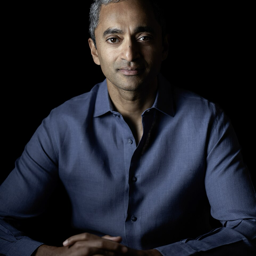
Social Capital (Chamath Palihapitiya)
Chamath Palihapitiya (founder/CEO)
Permanent-capital holding company spanning private AI/semis, biotech, energy, and software, plus residual public SPAC founder stakes. Repositioning toward an AI-era 'fulcrum assets' thesis — long silicon/semiconductors and critical-mineral/energy/compute infrastructure, short AI-disruptable SaaS.
- Not open — Not an open-ended vehicle — analysis only, not an available allocation.
- Self-reported — Headline returns are manager- or firm-reported and unaudited.
Top holdings

not disclosed — Residual founder stake from IPOA (Social Capital Hedosophia) de-SPAC. The only first-wave SPAC to deliver a positive return (>100%); the rest cratered.

Residual founder shares from IPOB de-SPAC. Down ~65% from IPO; one of the SPAC-era losers visible via SEC filings.

Residual founder stake from IPOC de-SPAC. Down ~74% since IPO after a short-seller report and regulatory scrutiny.

Residual SPAC founder position. Down ~74% since IPO. Biotech exposure.

not disclosed — Defining private win: ~$62.3M invested across 2017-2018 in the AI inference-chip maker; Nvidia paid ~$20B for Groq's assets in Dec 2025. Semiconductor/compute exposure, now realized.
not disclosed — Self-funded AI enterprise-software incubator announced Jan 2024; flagship 'Software Factory' product shipped Feb 2026. Internal company, not a fund position.

not disclosed — New 2025 blank-check vehicle (~$345M raised, >5x oversubscribed; ~$1.4B demand) targeting AI, energy, defense, and DeFi. Cash held pending a de-SPAC target; Chamath publicly warned retail investors to stay away.
Recent moves
Dec 2025: Groq assets bought by Nvidia for ~$20B, realizing Social Capital's defining AI-chip win. Feb 2026: 8090 'Software Factory' AI enterprise-software product shipped. 2025: launched AEXA SPAC (AI/energy/defense/DeFi). Jan 2026: publicly named copper his top 'AI investment' for 2026 — a pick-and-shovel macro bet on data-center power/conductor demand (cited CPER, FCX, SCCO, ICOP), framed as personal/macro thesis rather than a fund holding.
Loading disclosed positions…
Our take
Chamath runs Social Capital as a permanent-capital holding company, so its book is mostly private (AI semis, biotech, energy) with residual public SPAC founder stakes as the only market-traded handle — and only SoFi survived the SPAC bust; Opendoor/Clover/ProKidney/Virgin Galactic are down 65-98%. The real AI/compute exposure is the Groq inference-chip bet (~$62M → ~$20B Nvidia exit) and the 'fulcrum assets' repositioning: long silicon and critical-mineral/energy/compute infrastructure, short AI-disruptable SaaS. Note the AI-trade angle here is increasingly infra/picks-and-shovels (semis, copper, power) over AI-application equities. AUM and all return figures are self-reported with no audited public track record.
The teach-the-reader point is SPAC sponsor economics.
A sponsor's promote — roughly 20% founder shares acquired for nominal cost, plus warrants — pays out on de-SPAC completion largely regardless of how the merged company then performs. Social Capital's own record is the textbook divergence: retail holders of Opendoor/Clover/ProKidney/Virgin Galactic were crushed (down ~65-98%), only SoFi stayed positive, yet the sponsor's structuring economics were harvested at merger. Press tallies put the broader deal set's average around -14%. Strip out Groq and the public track record is a loss. Groq itself is the exception that carries the whole narrative — a 2017-18 venture bet (~$62M for ~1/3 ownership, board seat to 2021), not a product of the SPAC machine, and even it landed as Nvidia's ~$20.6B non-exclusive IP-license/acquihire (Dec 2025), which Chamath publicly downplayed. The 'fulcrum assets' + copper story reads as narrative agility replacing a story that soured, not a demonstrated repeatable edge. (Vintage: figures as of the 2024 annual letter and Dec 2025 / Jan 2026 press.)
Thesis
Social Capital is a closed permanent-capital family office where the public-facing marketing (the 'fulcrum assets' AI-infra pivot, the copper call) runs ahead of the verifiable record. The auditable evidence is a soured SPAC book — 4 of 5 completed de-SPACs down ~65-98% from post-merger levels, only SoFi positive — rescued reputationally by one genuine early-VC win, Groq. No audited track record exists.
Permanent-capital holding company, closed to outside money since ~2021. Mostly-private book (AI semis, biotech, energy, software) with residual public de-SPAC founder stakes (SOFI/OPEN/CLOV/PROK) as the only market-traded handle. Sponsors SPACs (the IPOA-IPOF series; new AEXA vehicle, 2025). Chamath publicly frames a picks-and-shovels thesis — long silicon/copper/power, short AI-disruptable SaaS — but that is a stated view, not a disclosed fund holding.
Assessment
- Groq is a real, generational early-VC win: ~$62M cost (2017-18) into Nvidia's ~$20.6B Dec-2025 IP-license/acquihire, with board-level conviction from inception.
- Permanent-capital structure removes LP redemption pressure — it can hold illiquid private bets through drawdowns without forced selling.
- The picks-and-shovels AI framing (silicon, copper, grid power) is analytically coherent versus a crowded app-layer trade.
- Early SPACs (Virgin Galactic +430%, Opendoor +134% at peak) showed genuine deal-structuring and retail-distribution reach.
- Sponsor/retail misalignment is structural: the promote pays on completion; 4 of 5 completed de-SPACs (flagship IPOA-IPOF plus the Suvretta biotech series) fell ~65-98% while sponsor economics were realized.
- No audited track record — the ~$2.147B managed vs ~$1.4B paid-in (2024 letter) and every return figure are self-reported.
- Groq is the single win holding up the narrative; press tallies of the broader deal set average roughly -14%.
- 'Fulcrum assets'/copper is a new thesis layered over the soured SPAC story — narrative pivot, not proven repeatable edge.
- The 'parabolic' copper call is a personal macro opinion aired on the All-In podcast, not a disclosed fund holding — don't conflate the two.
Record
Everything is self-reported; no audited return series or IRR exists. The one clean realization is Groq (Nvidia, ~$20.6B, Dec 2025) — a private venture position, not a SPAC outcome. On the flagship SPAC series the record is poor: IPOA (Virgin Galactic), IPOB (Opendoor), IPOC (Clover Health) and IPOE (SoFi, the only survivor to stay positive) all de-SPAC'd, while IPOD and IPOF found no target and liquidated near ~$10.01/share; ProKidney (PROK) came via the separate Suvretta biotech series (DNAC). The 2024 letter also disclosed a ~$400M markdown on an unnamed portfolio company. Critical 13F caveat: the family-office filing shows only leftover public de-SPAC founder stakes (SOFI/OPEN/CLOV/PROK) — the real permanent-capital book is private (Groq was private, 8090 is private, biotech/energy private), so the 13F is nearly useless as a read on the actual portfolio.
Risks & fit
- Key-person: the entire franchise is Chamath's brand and distribution; no disclosed succession.
- Opacity: the private permanent-capital book is unauditable; markdowns surface only when self-disclosed (e.g. the ~$400M 2024 writedown).
- The 13F reflects only residual public de-SPAC stakes — a misleading proxy for the private book.
- Concentration: one realized win (Groq) drives the story; biotech (ProKidney, Clover) and energy bets remain unproven.
- Reputation/reflexivity: a large retail following amplifies moves, but SPAC-era credibility damage lingers.
Our narrative-over-substance read would flip if Social Capital published an audited multi-year track record showing the private book compounding independently of Groq, or if the 'fulcrum assets' repositioning produced a second Groq-scale realized exit. Conversely, material writedowns on the unproven private marks (8090, the biotech and energy bets) — or another SPAC (AEXA) that enriches the sponsor while de-SPAC holders lose — would strengthen the read that the edge is distribution and narrative, not durable investment skill.
Analytical use only — this is a closed vehicle, not investable by outside capital. It is most valuable as a case study in SPAC sponsor-versus-retail economics and the celebrity-capital narrative cycle, and as one articulate expression of the picks-and-shovels AI-infrastructure thesis (silicon, copper, power). Judge the disclosed portfolio and the public SPAC record, not the person.
Closed to outside money, so no external management/performance fee is disclosed. Historically the economic 'fee' was the SPAC sponsor promote (~20% founder shares at nominal cost plus warrants), borne by de-SPAC shareholders, not fund LPs.