
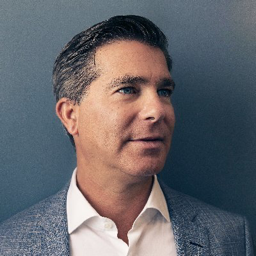
Gerber Kawasaki (Ross Gerber)
Ross Gerber — Co-Founder, President & CEO of Gerber Kawasaki Wealth & Investment Management (an SEC-registered RIA, not a hedge fund in the classic sense). One of the most-quoted retail-investor voices on Tesla and AI (@GerberKawasaki); a fixture of CNBC/Bloomberg and a high-volume X commentator who built an early, high-conviction Tesla + NVIDIA book for a tech-employee client base.
Growth/tech wealth-management book with early high-conviction single-name bets (Tesla, NVIDIA) layered on a core of broad index ETFs. AI exposure is expressed mainly through NVIDIA and the Nasdaq-100 / S&P growth ETFs rather than a deep semi-supply-chain book. Increasingly a public skeptic on Tesla's autonomy/AI position post-2025.
- Not a fund — A research, media or advisory business with no managed book to score.
Top holdings

top-5 holding — Core single-name AI long and the firm's primary direct AI-compute exposure; an early, long-held high-conviction position alongside Tesla.
large single-name (~$90M+ stake) — The franchise position and Gerber's public brand — but his stance turned critical in 2026 (called Tesla 'behind everyone' on AV/AI after NVIDIA's Alpamayo launch; floated a TSLA-SpaceX 'Berkshire of AI' merger framing). A holding he now openly debates rather than cheerleads.

largest holding — Core broad-tech/AI beta — the bulk of AI exposure is index-level, not stock-picked.

top holding — Large-cap growth core, AI-heavy by index composition.

top holding — International diversification sleeve — underlines this is a diversified RIA book, not an AI-concentrated fund.
Recent moves
2026: increasingly public Tesla skeptic — said Tesla is 'behind everyone now' on autonomy after NVIDIA's Alpamayo AV-model launch, called current Tesla vehicles unlikely to achieve full autonomy, and floated a Tesla-SpaceX merger as the only path to a 'Berkshire Hathaway of AI.' Continues to hold NVIDIA as the cleaner direct AI-compute exposure. Book remains anchored on broad ETFs (QQQ, SPYG) with the large legacy TSLA stake.
Loading disclosed positions…
Our take
The weakest-fit of the three on pure AI-investing specialism but the most institutionally real on AUM — a ~$3.1B SEC-registered RIA with a genuine, long-standing direct stake in both NVDA and TSLA and a very large megaphone. The honest caveat: this is a diversified wealth-management book (largest holdings are index ETFs), so 'AI investor' overstates the concentration; his direct AI thesis is essentially NVDA plus a now-skeptical TSLA view. No published return series — the track record is reputational/media-driven, not a verifiable composite. Include as a high-reach, NVDA-long media KOL and a useful contrarian Tesla-AI voice, not as a dedicated AI/semi fund.
The most important thing marketing won't tell you: this book is constraint-driven, not conviction-driven.
As a fiduciary RIA, Gerber has publicly said diversification rules FORCED him to trim NVDA, Micron and Broadcom even while bullish — the structural opposite of a conviction hedge fund that lets winners run. So the disclosed portfolio is closer to a growth-index sleeve than an 'AI fund.' Second: the 13F caveat is unusually severe here. A hedge fund's 13F is a lagged long-only slice of one book; GK's is the long-US-equity aggregate of ~350 separately-managed client accounts, so it reveals nothing about any single client's conviction and its top line (an ETF, QQQM) is a distribution default, not a call. Third, the brand and the book have diverged: 'the Tesla guy' no longer shows TSLA among his top holdings (last a top holding Q4 2024) and is now a public Tesla-autonomy skeptic. The real 'edge' is reach, not process.
Thesis
Gerber Kawasaki isn't a fund at all — it's a ~$4.1B SEC-registered RIA (regulatory AUM/AUA, 12/31/25) whose 13F long-US-equity book is ~$3.14B across 350 mostly-ETF positions for a retail/tech-employee client base. Its 'AI-investor' billing is a media artifact built on founder Ross Gerber's megaphone (CNBC/Bloomberg fixture, 500k+ X followers) and early Tesla/NVDA calls, not on a verifiable fund or an edge.
Growth-tilted wealth-management: a core of broad index ETFs (Nasdaq-100 QQQM, S&P growth SPYG, S&P value SPYV, international IXUS) with legacy single-name tilts to NVDA and, historically, TSLA. AI exposure is essentially NVDA plus the index weight of megacaps inside QQQM — not a semi-supply-chain book.
Assessment
- Institutionally real: a genuine ~$4.1B SEC-registered RIA (13F long-equity book ~$3.14B) with a live, long-standing direct NVDA position — not a paper persona.
- Diversified, low-single-name-risk construction — the ETF core (QQQM/SPYG/SPYV/IXUS) is a defensible client-suitable base, not a levered bet.
- Distribution moat: a very large, cross-platform megaphone that genuinely moves attention and drives client acquisition.
- Intellectual honesty on Tesla — publicly turned skeptic on FSD/autonomy rather than defending a legacy brand position.
- No published, audited return composite — the 'track record' is reputational/media, not a verifiable GIPS-style series; skill vs. beta is un-attributable.
- The AI thesis is thin: NVDA plus Nasdaq-100 index weight. Owning QQQM is owning the market's AI beta, not selecting it.
- Fiduciary diversification caps force winner-trimming — the mechanics fight the very conviction the brand sells.
- Acute key-person/brand risk: the franchise IS Ross Gerber, a polarizing public figure whose media presence carries reputational and headline risk.
- The 13F is near-useless as a conviction read — a 350-holding RIA aggregate across many client mandates, not a single directed book.
Record
No fund-level return exists to attribute — GK is an RIA managing many client accounts and publishes no audited composite; ytd/1y/3y are all n/a. The only hard, current figures are size: ~$4.1B regulatory AUM/AUA (12/31/25) and a ~$3.14B 13F long-US-equity book across 350 holdings on the Q1 2026 13F (filed May 6 2026). That 13F is the long-US-equity aggregate of client accounts, top-weighted by ETFs (QQQM, SPYG, NVDA, SPYV) — a wealth-management book, not a performance vehicle. The reputational record rests on being early and loud on Tesla and NVDA; note that TSLA has since fallen out of the top holdings (last appearing as a top holding in Q4 2024), so even the signature call is no longer visible at the top of his own disclosure. Any headline return attached to this name should be treated as an individual-account or index-beta figure, not a firm composite.
Risks & fit
- Being right-and-early: his Tesla-autonomy bearishness and NVDA valuation calls can be directionally sound yet mistimed.
- AI-beta compression: a Nasdaq-100/NVDA-heavy book is fully exposed to a megacap-AI de-rating with no supply-chain diversification to cushion it.
- Regulatory/headline risk on a highly public RIA principal; brand damage transmits straight to AUM.
- Diversification rules keep clipping winners, structurally capping upside from the very AI names the brand is known for.
- Reputational whiplash — a franchise built on Tesla now bearish on Tesla; asset-and-narrative mismatch.
If Gerber Kawasaki published an audited, GIPS-compliant composite showing sustained alpha net of fees versus a growth benchmark (i.e., returns not explained by QQQM/NVDA beta), the 'reputational, not verifiable — it's beta not alpha' read would be refuted. Likewise, if the 13F re-concentrated into a genuine AI/semi supply-chain book at high active weight, the 'diversified index sleeve dressed as an AI fund' framing would break.
Analytical interest only, and note the compliance frame: this is an RIA whose clients are its investors — the reader is not buying into a fund. Useful to track as a high-reach NVDA-long media voice and a contrarian Tesla-AI commentator for idea/sentiment flow, not as a specialist AI or semiconductor vehicle. Judge it as what it is: a diversified growth wealth-management book with a large megaphone.
RIA advisory-fee model — a fee on AUM (no carry, no 2/20 performance fee), disclosed in Form ADV Part 2A (exact tiered schedule not verified here). Economically distinct from the hedge/VC funds elsewhere on this list.