
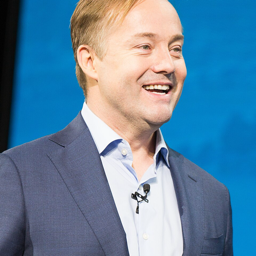
The Launch Fund (Jason Calacanis)
Jason Calacanis
Multi-sector pre-seed/seed angel platform funded out of a media empire (This Week in Startups, All-In). Writes $25K-$100K checks into ~100 high-agency-founder startups a year, increasingly weighted to AI agents, AI-native apps and aerospace, co-invested alongside a 10,000+ accredited-backer syndicate.
- Not open — Not an open-ended vehicle — analysis only, not an available allocation.
- Self-reported — Headline returns are manager- or firm-reported and unaudited.
Top holdings

Marquee early angel win — ~$25K at a ~$5M valuation that grew to roughly $100M by 2017; now public.

Early syndicate/angel deal reported at ~100x return; now public.

Sequoia-scout deal (~$378K at ~$4-5M valuation); ~50-70x reported. Still private, ~$1B+ valuation.

AI-augmented email client; exit logged July 2025 (acquired by Grammarly/Superhuman parent).
Space/compute-adjacent — closed $10M seed for satellite in-orbit stability; recent Launch-tied portfolio bet.
Recent moves
Most recent exit Nucanon (Nov 2025); Superhuman exit (Jul 2025). 2025-2026 Launch-tied seed activity includes Samara Aerospace ($10M seed, satellite stability), PraxisPro ($6M seed) and Fintalo ($500K+ pre-seed). On All-In/TWiSt, Calacanis has turned vocal on the AI-agent layer — warning founders against building on the OpenAI API and framing open-source agents (OpenClaw) as an existential threat frontier labs (Anthropic, OpenAI) want to kill — signalling where his AI thesis is pointed.
Our take
Calacanis is a multi-sector super-angel, not a thematic AI fund: his edge is dealflow volume off a media flywheel and ~$25K-$100K pre-seed checks across 100 startups/year, so AI/space/compute exposure is a growing slice rather than a concentrated bet. Hard numbers are scarce — AUM and fund-level returns are not disclosed, and the famous Uber/Robinhood/Calm multiples are self-reported single-deal outcomes that overstate the blended portfolio. For an AI-trade tracker the read-through is indirect: early-stage AI-native apps and aerospace via the syndicate, plus public proxies UBER and HOOD from legacy wins, with most positions illiquid and not market-weighted.
Read the structure, not the highlight reel.
LAUNCH is three stacked vehicles — an accelerator, blind-pool funds, and deal-by-deal SPVs ("The Syndicate") — and the marquee returns (Uber ~4,000x / ~$100M on a ~$25K check, Robinhood ~100x, Calm) are cherry-picked single deals, several from Calacanis's pre-2015 personal angel era, not a fund's realized DPI. In a power-law asset class where most pre-seed bets go to zero, the deal-by-deal SPV model is quietly LP-unfriendly: you pay full ~20% carry on each winner with no netting against the losers, versus a whole-fund waterfall that only takes carry after all capital is returned. That fee geometry, plus tiny non-controlling stakes (small checks, no board seats, dilution across 100 deals/yr), is what marketing won't say. The edge is real but narrow — proprietary dealflow volume from the media brand — and it is entirely one person's brand, with no disclosed succession.
Thesis
Calacanis's LAUNCH is a media-fed, high-volume super-angel platform, not a fund with a verifiable record — the famous multiples are single-deal outcomes from a deal-by-deal SPV/angel machine, and blended net-of-fee returns are undisclosed and almost certainly far lower.
Spray-and-pray pre-seed/seed: ~$25K–$100K (fund side up to $500K) checks into ~100 high-agency-founder startups a year, sourced off a media flywheel (This Week in Startups, All-In, LAUNCH Accelerator), with a 10,000+ accredited-backer syndicate co-investing deal-by-deal via AngelList SPVs. Recent tilt toward AI agents and aerospace.
Assessment
- Genuine, durable dealflow edge: the media flywheel (TWiSt/All-In/accelerator) surfaces ~100 startups/year at the top of the funnel — hard to replicate.
- Broad diversification within the portfolio (100+ names/yr) is the statistically correct posture for pre-seed power-law returns.
- Democratized access: the 10,000+ accredited syndicate lets small backers see deals they otherwise couldn't — a real distribution innovation.
- At least one franchise-making outcome (early Uber) plus later exits (Robinhood, Calm, Superhuman) prove the funnel can catch a winner.
- No public fund-level DPI, TVPI, or IRR — the entire track record is narrated through survivorship-biased single-deal multiples.
- Deal-by-deal SPV carry (~20% per winner, no loss-netting) is materially worse for LPs than a whole-fund waterfall in a mostly-zeros asset class.
- Uber (a ~2009 personal angel check, pre-institutional-fund) anchors the whole brand — it flatters the blended record it isn't part of.
- Tiny checks buy minimal ownership and no governance; heavy dilution over ~100 deals/yr caps the per-name upside that actually reaches LPs.
- Total key-person dependency — dealflow, LP trust, and the syndicate all ride on Calacanis's personal brand with no visible succession.
Record
No audited or fund-level return series is public. The record is told through single-deal multiples — Uber reportedly ~$100–125M on a ~$25K angel check (~4,000x), Robinhood ~100x, Calm ~50–70x — which are self-reported, survivorship-biased, and in Uber's case predate the institutional LAUNCH funds entirely. Portfolio is cited at anywhere from 145+ to 1,000+ investments with ~35 exits and ~7 unicorns depending on source and date, mixing unrealized paper marks with realized cash. Recent 2025 exits (Superhuman to Grammarly; Nucanon, Nov 2025) look modest relative to the headline lore. Until a blended net-of-fee DPI is shown, treat the multiples as anecdotes, not attribution — figures self-reported/press, as of Jul 2026.
Risks & fit
- AI-cycle repricing: a growing pre-seed AI-agent book is where model commoditization and app-layer mortality bite hardest.
- Fee drag: per-deal carry compounds against LPs precisely when the loss rate is highest.
- Illiquidity/J-curve: pre-seed exits take 8–12+ years; current marks are paper, DPI is unknowable for years.
- Key-person/brand risk: any hit to Calacanis's reputation or attention directly impairs dealflow and the syndicate.
- Adverse selection: the very best seed rounds are oversubscribed by top-tier VCs — a $25K–$100K check may signal access to rounds others passed on.
A published, audited net-of-fee DPI/TVPI across ALL LAUNCH funds (not selected deals) showing consistent top-quartile realized returns — with the SPVs netting losers against winners — would refute our skepticism that the marquee multiples overstate the blended record and that the deal-by-deal fee structure erodes LP outcomes.
Understanding a media-driven super-angel/syndicate model and why single-deal multiples are not a track record — not an investable recommendation. Most vehicles are accredited-only and closed; nothing here implies the reader can or should invest.
Syndicate uses AngelList economics: ~20% carry per SPV deal-by-deal (no loss-netting), plus per-vehicle setup/filing fees. Blind-pool fund terms undisclosed (likely ~2/20). Fund 4 targeting ~$100M for 400+ startups; 2010 vehicle ~$10M. Self-reported, Jul 2026.