
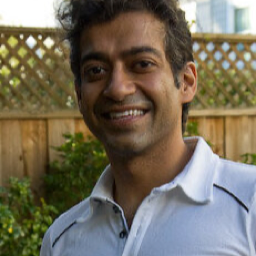
Naval Ravikant (AngelList / USVC)
Naval Ravikant — AngelList co-founder and one of the most prolific angel investors of the era (200+ startups). As of April 2026 he chairs the investment committee of AngelList's USVC Venture Capital Access Fund, which channels unlisted growth-stage AI companies to a broader investor base.
The angel-investors' angel, now aiming his franchise at the private-AI frontier. The AngelList USVC fund he chairs concentrates in the marquee private-AI names — SpaceX (xAI) (its largest single holding), Anthropic, OpenAI, Crusoe, Sierra, Vercel, Legora — explicitly to give wider access to unlisted AI growth companies. His personal book adds Perplexity and a 200+ startup tail across frontier tech.
- Not open — Not an open-ended vehicle — analysis only, not an available allocation.
Top holdings
Single largest position in the USVC fund as of Mar 31, 2026. Now part of the SpaceX/SPCX complex post Feb-2026 merger.

Top USVC frontier-model holding.

Top USVC frontier-model holding.
AI-datacenter/energy infra — the compute-power leg of the USVC book.
AI-application + dev-tooling layer of the USVC fund.

Naval's personal book; AI search.
Recent moves
Chairs the USVC investment committee (from Apr 2026); fund's top holdings are SpaceX (xAI) (largest), Anthropic, OpenAI, Crusoe, Sierra, Vercel, Legora. Personal book added Perplexity; wrote a Feb 2026 check into Quill Notes — still actively investing.
Our take
Why it matters: the USVC fund is a clean way to see how a top angel concentrates on the private-AI frontier — and it deliberately skews to SpaceX (xAI)/Anthropic/OpenAI plus the compute-energy (Crusoe) layer this page tracks. Edge: AngelList's deal-flow plus Naval's selection record give access to names retail can't normally reach. Caveats: USVC is new with no realized returns; everything is private and illiquid (disclosed-not-weighted, not market-weighted); access-fund structures carry layered fees and secondary-pricing risk — the allocation stats are not performance.
The teaching point: this is an access product, not Naval's angel book.
He chairs the investment committee while Ankur Nagpal runs day-to-day portfolio management — Naval is not the deal-picker, so the 'angel-of-angels selection edge' is brand halo on what is functionally beta-to-private-AI. The real story is the fee stack and the mark. The 3.61% gross expense ratio (2.50% net until waivers lapse ~Oct 29 2026) is fee-on-fee: 0.95% of underlying-fund fees sits beneath AngelList's own 1.00% + 0.25% service + 1.41% other. You pay ~2.5%/yr to hold secondaries whose NAV is a marked estimate, not a clearing price — and platform-sourced secondaries into xAI/OpenAI are often filled at a premium to the last primary round. 'No carry' is the hook, but a 2.5% flat drag compounds over an illiquid multi-year hold with zero realized DPI. The honest frame: much of this exposure already sits inside listed crossover funds and the labs' own rounds; USVC's real value-add is regulated access at $500 — you pay a fund-of-funds toll for the wrapper.
- 2026-06Fees restated at 25 Jun 2026: 4.55% gross / 2.50% net — 1.00% management plus 3.55% other-and-underlying-fund expenses, less 2.05% adviser reductions — with the waiver running through at least 24 Nov 2027.
Thesis
USVC packages secondary and growth-round stakes in the marquee private-AI names — xAI (largest, ~20.23% of assets), Anthropic, OpenAI, Crusoe, Sierra, Vercel, Legora — into a '40 Act-registered closed-end fund any US investor can buy from $500 with no accreditation, chaired by Naval Ravikant. The bet, in his words: 'by the time a stock IPOs, most of the alpha is gone,' so give retail a regulated pre-IPO frontier vehicle.
Three AngelList-sourced channels: LP stakes in emerging venture funds, direct growth rounds, and platform-sourced secondaries. Non-diversified Delaware closed-end trust, ~44.3% of capital deployed across 7 names as of Mar 31 2026 (xAI ~20.23%, the single largest). Charges 1.00% management + 0.25% service, takes no carried interest, but stacks to a 3.61% gross / 2.50% net all-in expense ratio.
- 2026-06The disclosed book at 25 Jun 2026 is 38 companies and 58.2% deployed, led by Mercury 15.1%, Supabase 10.3% and SpaceX 6.5%; Crusoe is 0.6%, and Anthropic, OpenAI, Sierra, Vercel and Legora are not disclosed.
Assessment
- Genuinely widens access: SEC-registered '40 Act closed-end at a $500 minimum, no accreditation, to names retail cannot buy directly (xAI, OpenAI, Anthropic).
- No carried interest — unusual in venture; removes the 20%-of-profits leakage that normally compounds against LPs.
- AngelList's platform deal-flow and secondary-sourcing is a real structural edge for assembling a private-AI book at scale.
- Regulated fund shares with audited NAV beat the tokenized-equity workarounds (Robinhood's OpenAI/SpaceX tokens, which OpenAI publicly disowned).
- The 2.50% net / 3.61% gross expense ratio is a heavy fee-on-fee stack (0.95% underlying-fund fees beneath AngelList's own layer); the 'no carry' headline masks a large flat drag.
- Naval chairs the IC (Ankur Nagpal runs day-to-day) — he is not the deal-picker; his 150-200+ personal angel book is not what you are buying, so the personal-record halo is largely marketing.
- NAV is a marked estimate on illiquid secondaries, not a traded price, and platform secondaries often carry a premium to the last primary round.
- No realized track record: ~44.3%-deployed across 7 names is an allocation stat, early vintage, zero DPI — J-curve and redemption gating still ahead.
- Concentration: xAI is ~20.23% of assets (single largest, 'Acquisition Pending') and the other six each <5% — one xAI mark can dominate the outcome.
- 2026-06xAI is no longer a standalone position: SpaceX absorbed it in an all-stock deal on 2 Feb 2026 and listed on Nasdaq on 12 Jun. At 25 Jun 2026 SpaceX is 6.5% and the largest holding is Mercury at 15.1%.
Record
There is no performance to read — that is the point. The only public figure, ~44.3% of capital deployed across 7 names as of Mar 31 2026, is an allocation stat, not a return; the fund is an early-vintage closed-end with no disclosed IRR and no realized DPI. The marks that will surface as 'NAV' are secondary/round valuations of private companies (xAI largest at ~20.23% of assets; the other six each <5%, order not disclosed), carried at estimates AngelList sets — so any early 'gain' is a paper re-rate, not cash returned. Against that, the 2.50% net expense ratio (rising toward 3.61% gross once the waiver lapses ~Oct 29 2026) is a certain, compounding drag on an uncertain, illiquid, multi-year hold. Naval's personal angel returns (200+ startups, early Uber/Twitter) are real but undisclosed and NOT what this fund delivers — don't import his lifetime record onto a vehicle he chairs but doesn't stock-pick.
Risks & fit
- Fee waiver lapses ~Oct 29 2026 → the full 3.61% gross expense ratio bites and compounds on an illiquid hold.
- Secondary-pricing risk: book filled at premiums to primary rounds, so the entry mark may already be rich.
- Liquidity/gating: closed-end/interval structure means limited redemptions and no daily exit.
- Single-name concentration: xAI is ~20.23% of assets; that one mark re-rating down could dominate NAV.
- AI private-valuation compression: a frontier-lab down-round would cascade through the whole marked book.
The skeptical read — expensive, brand-halo access to potentially over-marked secondaries — breaks if, over the fund's life, USVC distributes or exits at or above its carried marks and its realized net-of-2.5%-fee DPI beats a simple liquid AI basket. Concretely: if xAI/OpenAI/Anthropic IPO or clear secondaries above USVC's entry, net returns clear a public AI index, and the NAV marks prove conservative rather than inflated, then the private-frontier access premium more than paid for the fee stack and illiquidity, and the 'paying a toll for beta' critique fails.
An analytical lens on how a top-brand angel franchise packages the private-AI frontier for retail through a regulated wrapper, and on the fee, mark, and liquidity tradeoffs of any venture access-fund (fee-on-fee, marked NAV, no realized DPI, closed-end gating). Not a solicitation: USVC is buyable at $500, but this is a critique of the structure, not a recommendation to buy, avoid, or mirror.
1.00% management + 0.25% shareholder-service + 0.95% underlying-fund fees + 1.41% other = 3.61% gross expense ratio; 2.50% net after fee waivers expected to run to ~Oct 29 2026. No carried interest. Heavy for indirect, marked, illiquid exposure.