
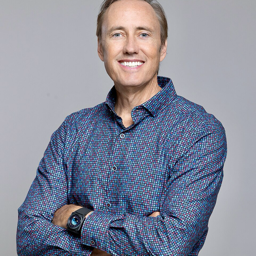
Steve Jurvetson / Future Ventures
Steve Jurvetson — co-founder of Future Ventures (2018, with Maryanna Saenko); sitting SpaceX board member and early SpaceX + Tesla investor (formerly of Draper Fisher Jurvetson, whose DFJ Growth arm put ~$800M into SpaceX for a >2% stake).
A frontier-tech individual investor whose franchise position is SpaceX (board seat; the DFJ lineage holds a >2% stake from ~$800M deployed) plus Tesla. Future Ventures has pivoted hard into the AI wave — a dedicated ~$169M AI fund writing checks into Musk's SpaceX (xAI), plus space/aerospace (Xona Space Systems) and AI-imaging (Glass). His book sits squarely at the space + robotics + deep-learning intersection.
- Not open — Not an open-ended vehicle — analysis only, not an available allocation.
Top holdings
Jurvetson sits on the SpaceX board; DFJ Growth invested ~$800M for >2%. Now partly public via SPCX (Jun 2026 IPO).
long — Future Ventures' AI fund cut a check into Musk's SpaceX (xAI) — now part of the SpaceX/SPCX complex post Feb-2026 merger

not disclosed — Early DFJ-era investor; legacy exposure.

long — PNT/space-infra startup — the space-infra leg of the book.
long — GV-backed AI imaging — AI-application exposure in the new fund.
Recent moves
Closed a ~$169M AI-dedicated fund (2025) and deployed into SpaceX (xAI), Xona Space Systems, and Glass. As a SpaceX director, his stake became partly marketable at the Jun 2026 SPCX IPO.
Our take
Why it matters: a rare investor who sits on the SpaceX board AND is actively writing fresh AI-fund checks — direct read on the space + AI frontier this page tracks, now partly investable via SPCX. Edge: board-level SpaceX information and a long deep-tech pattern-recognition record. Caveats: the cited SpaceX size is DFJ-lineage, not necessarily his personal/Future Ventures economics; the ~$169M AI fund is too young to have proven returns; private positions are disclosed-not-weighted.
The marketing conflates three different things a paid reader should separate.
(1) The famous >2% / ~$33B SpaceX stake is DFJ Growth's — an institutional late-stage fund that first invested in 2009 and deployed ~$800M — not Future Ventures' and not Jurvetson's personal economics; he left DFJ in 2017 and DFJ Growth operates independently. (2) Future Ventures' OWN funds are $169M (2024) and ~$200M (2025); at that size, a check into a $1.5T-pre-IPO SpaceX or an xAI mega-round buys a rounding-error stake — the June 2026 SPCX IPO windfall largely does not flow to these funds' LPs. (3) The board seat is real and confers signal/access, but access is not ownership. So the durable question is whether Future Ventures' own vintages compound, independent of a DFJ-era halo that is 15–25 years old. That record is undisclosed.
Thesis
A frontier-tech brand-name investor whose public reputation rests on 2000s-era DFJ hits (Hotmail, Baidu, Skype, Tesla, SpaceX), now running Future Ventures — two small early-stage funds ($169M AI-focused, 2024; ~$200M Fund IV, 2025) with no disclosed realized track record. The headline SpaceX wealth belongs to a firm he left in 2017, not to the funds a reader would encounter today.
Concentrated early-stage bets on 'frontier' science — space, AI, tech-bio, energy, longevity — where Jurvetson leans on deep-tech pattern-recognition and network access (a SpaceX board seat, proximity to Musk). Small fund sizes deployed into a handful of high-conviction, long-duration positions; returns are power-law-dependent on one or two breakout winners per vintage.
Assessment
- Genuine deep-tech access and deal flow — a sitting SpaceX board seat and long Musk-orbit relationships surface frontier rounds few funds see.
- A real, documented early-stage hit rate across two decades (Hotmail, Baidu, Skype, Tesla, SpaceX) — the pattern-recognition is not invented, even if dated.
- Small, focused funds ($169M/$200M) preserve the ability to return capital on a single winner — appropriate construction for a power-law frontier thesis.
- Thesis coherence: space + AI + robotics sit at a real technological intersection, not a scattershot generalist book.
- The celebrated returns are attributed to DFJ Growth (which he left in 2017), not to the funds on offer today — brand equity is being borrowed from a vehicle he no longer manages.
- Future Ventures' own DPI is undisclosed; the brand rests on paper marks and reputation, not proven realized cash-on-cash from its own vintages.
- At $169–200M, checks into SpaceX/xAI mega-rounds buy negligible ownership — the SPCX IPO enriches DFJ-era and other early holders, not these funds in size.
- Heavy single-manager key-person dependence, including a 2017 leave of absence from the SpaceX board amid DFJ-era conduct allegations (public record) — a reputational/continuity fact, not a trading claim.
- Frontier bets (space, longevity, fusion) carry very long J-curves; realized outcomes may be a decade out, so any 'edge' is unfalsifiable near-term.
- 2026-07The direction holds but the level does not: early holders' gains are unrealised paper, locked until the 6 Aug unlock, and SPCX now trades 19.7% below its offer price with over $1T of value erased since June.
Record
No fund-level returns are disclosed — Future Ventures is a private VC firm with no 13F filer status, so its book is disclosed-not-weighted and its marks are unaudited paper. The only hard, verifiable performance datapoint is the DFJ Growth SpaceX position: ~$800M invested from 2009, a >2% stake reported worth at least ~$33B, crystallized partly at the June 12, 2026 SPCX IPO (priced $135, ~$75B raised, ~$1.8T pricing valuation, ~$2.1T after the day-one pop; ~$153 by late June — figures as of the IPO window). That is DFJ Growth's outcome, not Future Ventures'. Future Ventures' own $169M (2024) and ~$200M (2025) funds are too early-vintage to show realized DPI. Vintage note: DFJ-era wins are 2000s; the funds a reader can assess are 2024–2025.
- 2026-07SPCX closed $108.37 on 31 Jul 2026 — 19.7% below its $135 offer, 52.0% off the 16 Jun high, market cap ~$1.43T. Nothing has been crystallised: the first institutional unlock (~911.5M shares, ~$123B) falls on 6 Aug.
Risks & fit
- Key-person: the franchise is one individual; incapacity, reputational relapse, or a board exit would impair access and deal flow.
- Attribution risk: LPs may be underwriting a DFJ-era track record that the current firm cannot reproduce at $200M scale.
- Illiquidity/J-curve: frontier positions may not realize for a decade; interim TVPI marks are self-reported and un-stress-tested.
- Concentration: power-law dependence on 1–2 winners per vintage; a missed breakout leaves a small fund with no return driver.
- Access-not-ownership: proximity to Musk companies does not translate into economically meaningful equity at current fund sizes.
The read flips if Future Ventures' OWN funds (III/IV and the 2024 AI fund) post top-decile REALIZED DPI on an audited, cash-returned basis — driven by positions these funds actually own in size, not by the DFJ-lineage SpaceX stake or by paper TVPI marks. Conversely, it is confirmed if the only large realized outcome remains the DFJ Growth SpaceX exit and Future Ventures' own vintages return at or below median.
A reader tracking the space + AI frontier who wants an honest map of who actually owns the SpaceX upside (DFJ Growth and other early holders — not Future Ventures at meaningful size) and how to separate a brand-name investor's borrowed track record from the funds actually on offer. The funds themselves are closed private vehicles — not investable by the reader.
Not disclosed. Early-stage VC funds of this size conventionally carry ~2% management fee and 20–25%+ carried interest, but Future Ventures' actual terms are private; treat any specific figure as an assumption, not a disclosed fact.